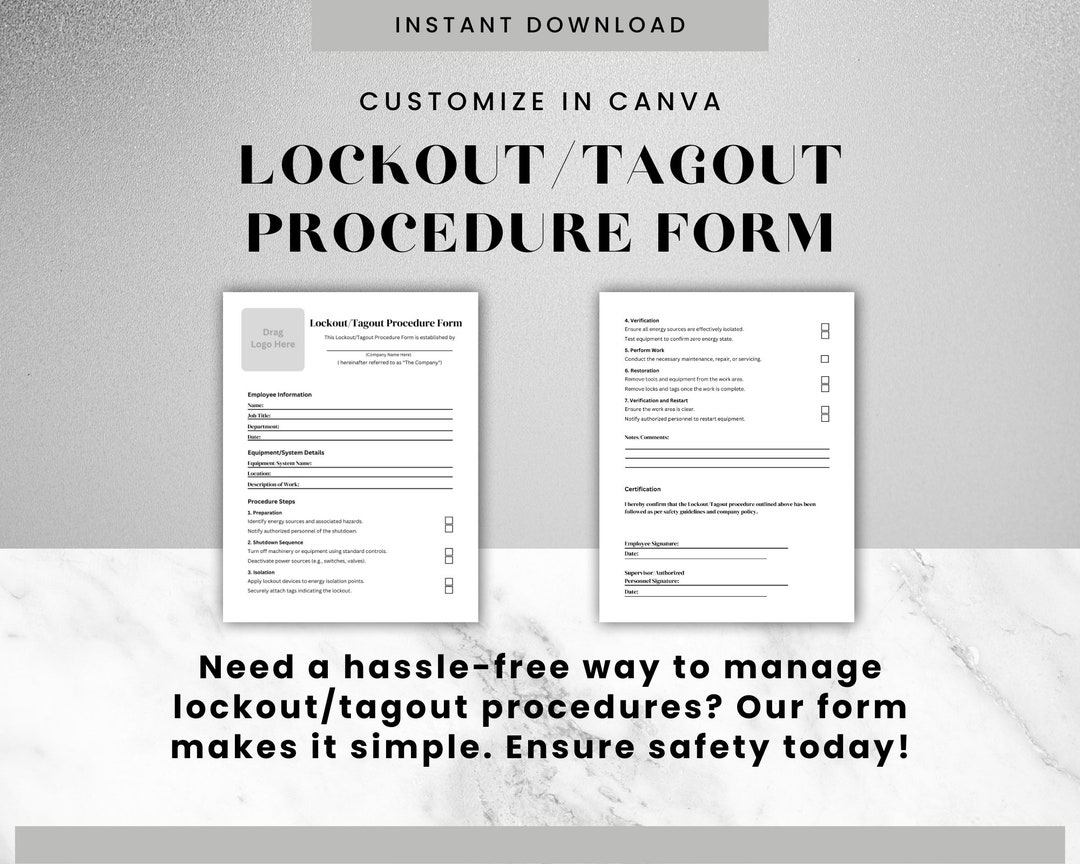
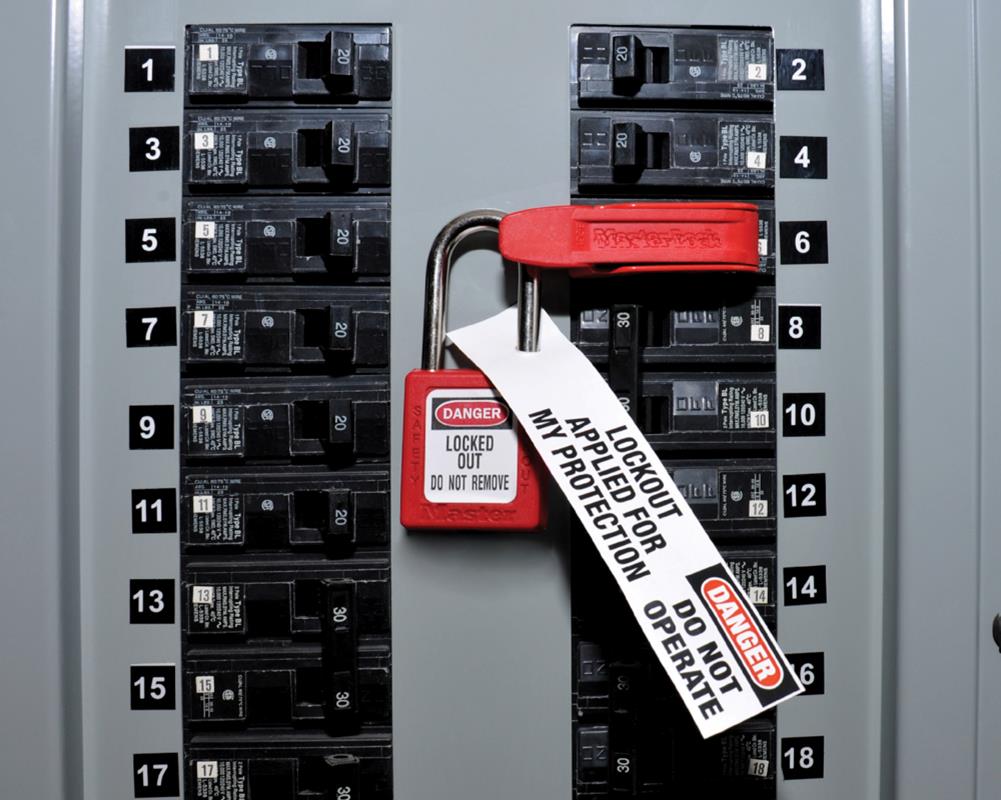
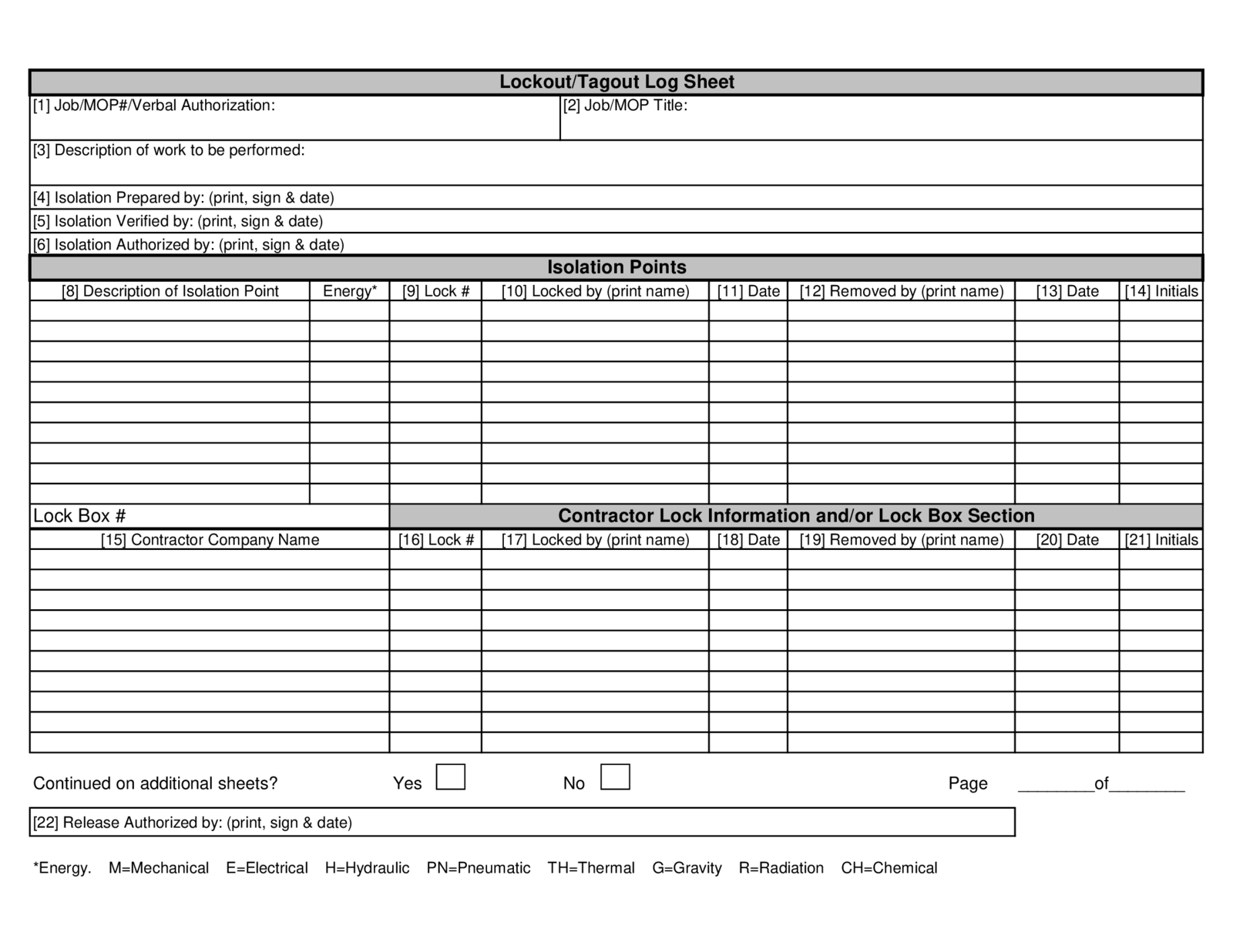
Every year, hundreds of workers suffer serious injuries—or worse—because machinery was accidentally re-energized during maintenance. The culprit? Missing or inconsistent lockout tagout (LOTO) procedures. At the heart of an effective LOTO program are clear, visible, and standardized signs. While digital tools and proprietary systems exist, printable lockout tagout signs remain the most practical, accessible, and cost-effective solution for small to midsize operations, temporary setups, and fast-response environments.
These signs don’t just warn—they communicate accountability, prevent cross-departmental confusion, and create a paper trail of safety compliance. Whether you're managing a municipal maintenance crew, a manufacturing shift, or a single-service technician team, having printable LOTO signs ready to deploy can be the difference between a safe repair and a catastrophic incident.
Why Printable Lockout Tagout Signs Matter
Lockout tagout isn’t just a best practice—it’s an OSHA-mandated requirement under 29 CFR 1910.147. This regulation demands that machines be de-energized and secured before service, and that employees be protected from unexpected startup. One critical component of this process? Clear signage.
Printable LOTO signs serve three vital purposes:
- Visual Deterrence – A bright red “Do Not Operate” tag instantly signals danger and halts unauthorized action.
- Accountability – A sign with a worker’s name, department, and time of lockout creates traceability.
- Compliance Documentation – Printed signs can be archived as part of safety audits or incident investigations.
Unlike permanent signage, printable versions offer flexibility. They can be customized on-demand, updated with changing workflows, and deployed without specialized printers or installation. This makes them ideal for facilities with rotating equipment, seasonal maintenance, or limited safety budgets.
Common Use Cases for Printable LOTO Signs
Not all situations require industrial-grade metal tags. Printable signs shine in dynamic or temporary environments. Here are real-world scenarios where they’re indispensable:
- Preventive Maintenance Schedules
- A technician servicing a conveyor system prints a batch of LOTO tags every Monday morning, pre-filled with shift and location data.
- Contractor Work
- Outside vendors often don’t carry branded LOTO materials. Providing them with printable signs ensures consistency and compliance.
- Training Drills
- Safety managers run mock lockout drills using printed signs to simulate real-world tagging procedures without interrupting operations.
- Emergency Repairs
- When a pump fails at midnight, the on-call team grabs a printed tag from a wall-mounted folder—no waiting for procurement.
- Multi-Energy Systems
- Complex machines (e.g., hydraulic presses with electrical, pneumatic, and thermal power) require multi-lock tags. Printable templates allow customization for each energy type.
In each case, the ability to print signs in-house removes delays, reduces errors, and ensures every team member follows the same protocol.
What to Include on Your Printable LOTO Sign
A poorly designed sign is worse than no sign—it creates false confidence. An effective printable LOTO tag must include non-negotiable elements to meet both safety and compliance standards.
Essential Components of a LOTO Sign
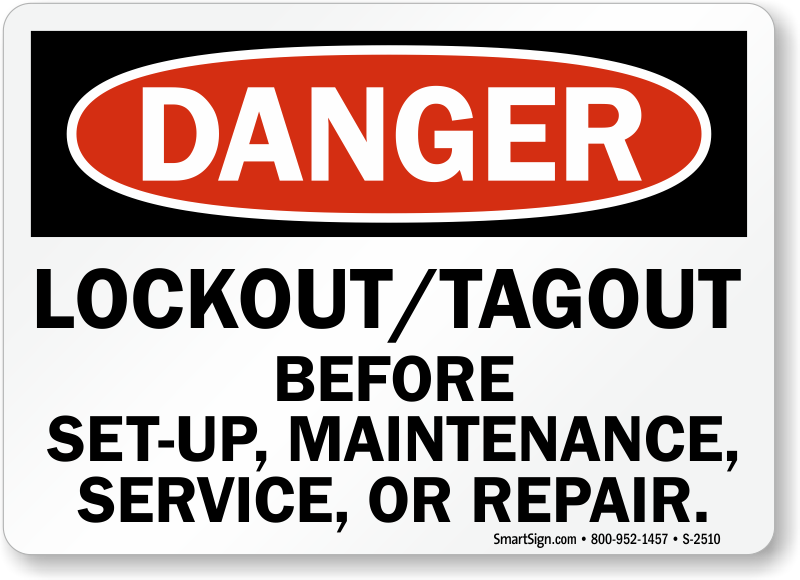
| Element | Purpose |
|---|---|
| “Danger – Do Not Operate” Header | Immediate visual warning in bold, red lettering |
| Employee Name | Identifies the authorized person who applied the lock |
| Department / Shift | Adds organizational context |
| Date and Time | Tracks when the lock was applied |
| Equipment ID | Prevents confusion in facilities with similar machines |
| Reason for Lockout | E.g., “Motor Replacement,” “Belt Adjustment” |
| Signature Line | Reinforces accountability |
| Energy Types Isolated | E.g., electrical, hydraulic, steam |
Avoid overcrowding. Use clean, high-contrast fonts (like Arial or Helvetica) and limit the layout to one page. A 4x6 inch format is ideal—large enough to read, small enough to attach to most lock hasps.
Common Mistakes to Avoid
Even experienced safety teams make errors with printable LOTO signs. These missteps can invalidate your compliance and endanger workers.
- Using Generic Templates
- A sign that says “Under Maintenance” without specific details fails OSHA scrutiny. Always require names, times, and reasons.
- Printing on Low-Quality Paper
- Standard copy paper tears, fades, or smudges. Use water-resistant, laminated, or synthetic paper for durability.
- Skipping the Tag Attachment
- A sign left on a clipboard or tool cart is useless. It must be physically tied to the lockout device with a non-reusable cable or zip tie.
- Allowing Handwritten Entries Only
- Illegible handwriting creates ambiguity. Use pre-printed fields wherever possible.
- Not Updating Templates After Audits
- If OSHA or an internal auditor flags missing info, revise the template immediately—don’t wait.
One Midwest food processing plant was fined $37,000 after an inspector found 12 machines with blank, photocopied LOTO tags. The root cause? A shared template had been printed without filling in employee details. Template discipline is compliance discipline.
Top 5 Sources for Printable Lockout Tagout Signs
You don’t need to design from scratch. Several trusted sources offer professionally designed, OSHA-aligned printable LOTO templates—many free or low-cost.
1. OSHA.gov (Free Templates) The U.S. Department of Labor provides free PDF LOTO tags that meet federal standards. While basic, they’re legally sound and perfect for startups or public agencies. Best for: Compliance-first teams on a tight budget. Limitation: No customization options.
2. SafetySign.com Offers downloadable, customizable LOTO tags in multiple formats (PDF, Word). Includes bilingual (English/Spanish) versions. Best for: Multilingual teams or facilities with diverse staff. Bonus: Pre-formatted for Avery labels.
3. Creative Safety Supply Provides themed templates: electrical, hydraulic, multi-lock, and group lockout. Also includes barcode fields for digital tracking. Best for: Midsize manufacturers adding traceability. Tip: Pair with their free lockout tag log sheets.
4. EHS Docs (ehsdocs.com) Subscription-based but rich in editable templates. Includes audit-ready LOTO procedures, training sign-offs, and printable checklists. Best for: Safety managers building full programs. Value Add: Templates align with ANSI Z535.2 sign standards.

5. Template.net (Paid, Premium Designs) Highly visual, professional layouts with company branding options. Ideal for corporate safety branding. Best for: Facilities wanting polished, branded signage. Caution: Verify OSHA alignment before deployment.
Pro Tip: Download one template from each source, test-print them, and conduct a team review. Choose based on clarity, field usability, and compatibility with your workflow—not just appearance.
How to Implement Printable LOTO Signs in Your Workflow
Having templates isn’t enough. Integration is what turns paperwork into protection.
Follow this 4-step rollout:
- Assign Ownership
- Designate a safety coordinator to manage templates, updates, and inventory.
- Print and Stockpile
- Print 50–100 copies of each template. Store in labeled, weatherproof folders near high-risk equipment or at maintenance stations.
- Train with Real Scenarios
- Conduct a 15-minute drill: hand out blank printable tags, simulate a breakdown, and have techs fill them out correctly.
- Audit Monthly
- Randomly inspect 5–10 active lockout tags. Are they filled out? Attached? Dated? Use gaps as teaching moments.
One automotive parts plant reduced LOTO violations by 82% in six months simply by switching to pre-filled printable tags with dropdown reasons (e.g., “Pump Repair,” “Control Panel Upgrade”)—eliminating vague entries.
The Bottom Line: Clarity Saves Lives
Printable lockout tagout signs are more than office supplies—they’re frontline defense tools. When a machine is shut down, seconds count. A clear, well-designed, and properly used tag removes guesswork, stops unauthorized restarts, and protects lives.
Don’t wait for an audit or incident to act. Download a compliant template today, print a batch, and place them where they’re needed most. Train your team to use them without exception. Because in the world of industrial safety, the simplest solutions are often the most powerful.
Make printable LOTO signs a non-negotiable part of every maintenance task. Your team’s safety depends on it.
Frequently Asked Questions
What makes a printable LOTO sign OSHA-compliant? It must include a clear warning (e.g., “Do Not Operate”), employee name, date/time, equipment ID, and reason for lockout. The sign must be durable and attached to the lock.
Can I use a handwritten printable tag? Yes, but only if all required fields are legibly filled. Pre-printed templates with fillable fields reduce errors.
Are free OSHA templates sufficient for industrial use? Yes, if used correctly. However, facilities with complex systems may need enhanced versions with energy-type indicators or multi-lock fields.
How long should a printable LOTO sign last? It should remain legible for the entire duration of the lockout—typically up to 8–12 hours. Use water-resistant or laminated paper for longer jobs.
Can I brand my printable LOTO signs? Yes, but safety information must remain prominent. Company logos should not reduce readability or compliance.
Do I need different signs for electrical vs. mechanical lockouts? Not necessarily. A single template can cover multiple energy types if it includes a checklist (e.g., “Electrical – Yes/No”, “Hydraulic – Yes/No”).
Where should I store printable LOTO signs? Keep them in labeled, accessible folders near maintenance hubs, control rooms, or tool cribs—away from moisture and damage.
FAQ
What should you look for in Printable Lockout Tagout Signs for Workplace Safety? Focus on relevance, practical value, and how well the solution matches real user intent.
Is Printable Lockout Tagout Signs for Workplace Safety suitable for beginners? That depends on the workflow, but a clear step-by-step approach usually makes it easier to start.
How do you compare options around Printable Lockout Tagout Signs for Workplace Safety? Compare features, trust signals, limitations, pricing, and ease of implementation.
What mistakes should you avoid? Avoid generic choices, weak validation, and decisions based only on marketing claims.
What is the next best step? Shortlist the most relevant options, validate them quickly, and refine from real-world results.