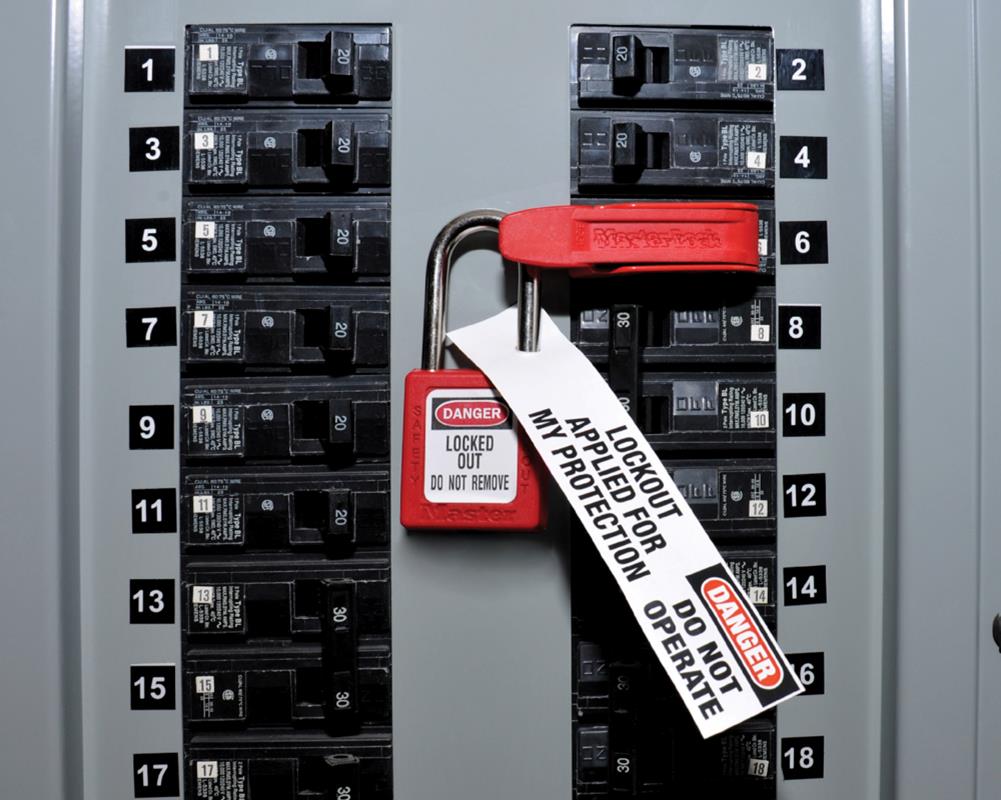
Every time machinery is serviced, a silent risk looms—unexpected energization. That split-second restart of a conveyor, press, or electrical panel can maim or kill. The solution? A disciplined lockout tagout (LOTO) process backed by a reliable log sheet. The lockout tagout log sheet template isn't just paperwork—it's a living document that tracks accountability, timing, and verification when lives are on the line.
Yet too many facilities rely on inconsistent notes, memory, or ad-hoc forms. That's a compliance and safety disaster waiting to happen. A standardized LOTO log sheet template closes the gaps. It ensures every authorized employee follows the same protocol, every time.
This article breaks down what makes an effective lockout tagout log sheet, how to use it correctly, and provides a practical template structure you can adapt today.
Why a Lockout Tagout Log Sheet Is Non-Negotiable
OSHA’s 29 CFR 1910.147 requires employers to establish a written energy control program, including procedures for de-energizing, isolating, blocking, and securing machines. Central to this is documentation. Each lockout event must be recorded—not as a formality, but as proof that safety protocols were followed.
Without a log, you’re operating blind. Did the correct energy sources get isolated? Who applied the lock? When was the equipment cleared? Without answers, you risk:
- Incomplete isolation leading to accidental startup
- Unauthorized re-energization
- Confusion during shift changes
- Regulatory fines during audits
A well-designed lockout tagout log sheet template turns procedural compliance into routine practice.
Key Elements of an Effective LOTO Log Sheet Template
A strong template isn’t just a table with lines. It’s engineered to enforce attention to detail. Here’s what every lockout tagout log sheet should include:
1. Equipment Details Capture the machine name, ID number, and location. This eliminates confusion—especially in plants with multiple units of the same model.
Example: Hydraulic Press #7, North Production Line, Bay 4
2. Date and Time of Lockout Record both when the lockout begins and ends. Duration matters for scheduling and incident analysis.
3. Authorized Employee Information Name, ID, department, and signature of the person applying the lock. This establishes accountability.
4. Energy Sources Isolated List each type of energy controlled: electrical, hydraulic, pneumatic, mechanical, thermal, etc. Include specific disconnect points (e.g., circuit breaker #12).
5. Lock and Tag Numbers Each lock and tag should have a unique identifier. This allows tracking and retrieval, especially if someone leaves mid-shift.
6. Reason for Lockout A brief description: “Routine maintenance,” “Bearing replacement,” or “Jam clearance.” This helps auditors and supervisors assess risk.
7. Verification of Isolation A checklist or signature line confirming zero-energy state was verified using proper testing methods (e.g., voltage tester, bleed-down procedure).
8. Clearance and Removal Authorization Final sign-off by the same employee who applied the lock—or documented handover if shift replacement is allowed under policy.
Common Mistakes That Undermine LOTO Logs
Even with a solid template, human error and poor habits can compromise safety.
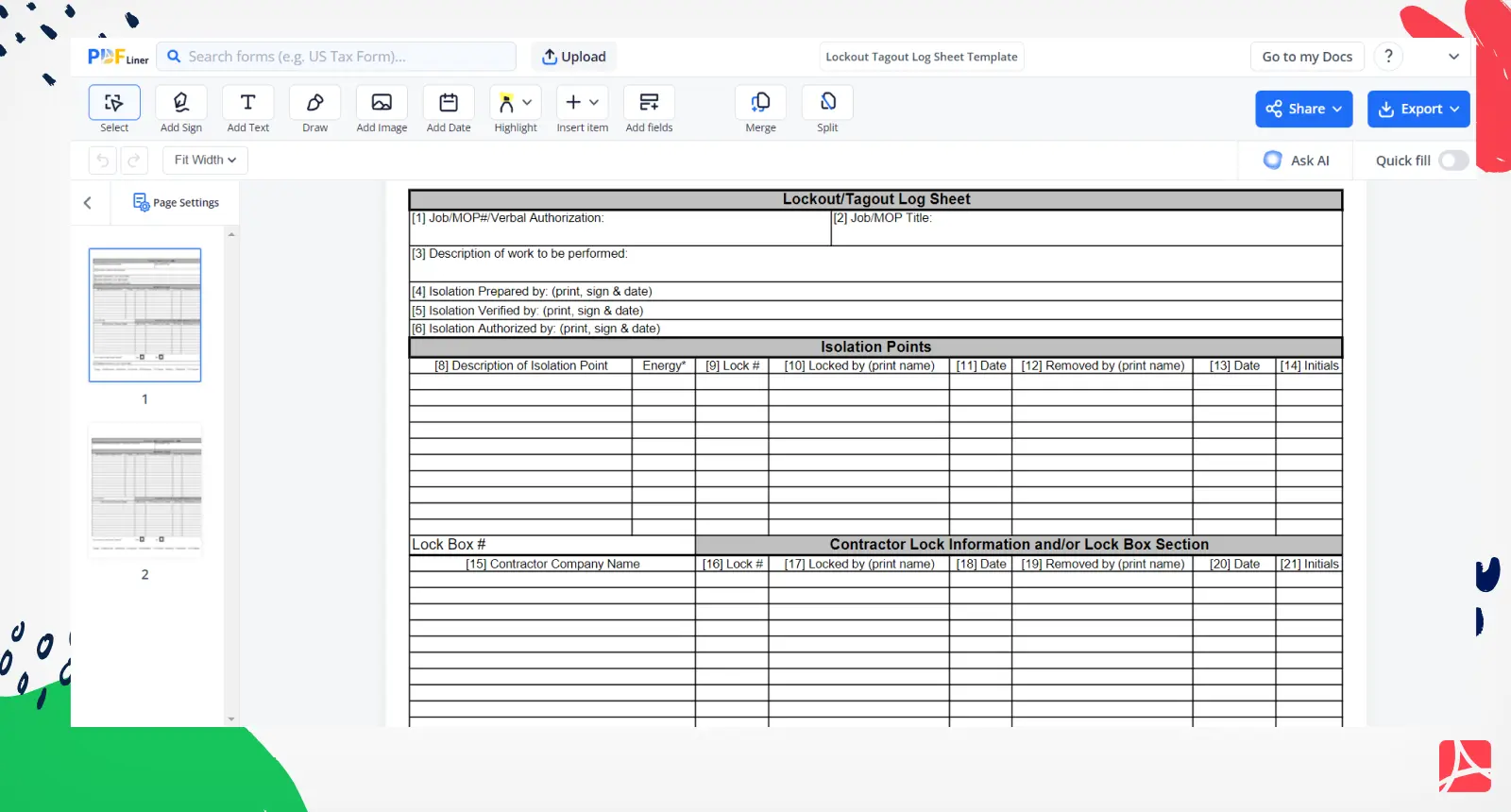
Mistake 1: Using a Generic or Handwritten Form A crumpled piece of paper with scribbled notes is hard to read and easy to lose. A standardized, digital or printed template ensures consistency.
Mistake 2: Skipping the Verification Step Writing “verified” without actual testing is fraud—and deadly. The log sheet must require proof, not assumption.
Mistake 3: Sharing Locks or Tags Some workers use a single lock for multiple energy sources. Each energy point needs its own lock and tag, documented separately.
Mistake 4: Delayed Log Entry Filling out the log after the fact defeats its purpose. The log must be completed in real-time, before work begins.
Mistake 5: No Audit Trail If logs aren’t stored or reviewed, they’re useless. Retain completed sheets for at least one year for OSHA compliance and internal audits.
Real-World Use Case: How a LOTO Log Prevented a Major Injury
At a Midwest food processing plant, a technician began unclogging a conveyor system. He applied a lock and filled out the LOTO log, noting electrical and mechanical isolation points. During his shift change, another worker attempted to restart the line—unaware of the ongoing maintenance.
Because the log was posted at the central LOTO board and cross-referenced in the shift handover sheet, the supervisor intervened. The log listed the technician’s name, lock ID, and expected completion time. The restart was delayed, and the technician finished safely.
Without the log, the conveyor could have powered on mid-repair. Instead, the documented process stopped a potential fatality.
Best Practices for Implementing a LOTO Log System
A template alone won’t fix unsafe behavior. It must be part of a broader safety workflow.
Train Employees on Proper Use Not all authorized employees understand how to complete the log correctly. Conduct hands-on training with real equipment and mock scenarios.
Place Logs at Point of Use Keep physical log sheets or tablets near LOTO stations or equipment. Digital logs on mobile devices can sync to a central system.
Integrate with Maintenance Scheduling Link LOTO logs to work orders. When a maintenance ticket is created, a log sheet is automatically initiated.
Conduct Monthly Audits Review 10–20% of completed logs monthly. Check for completeness, accuracy, and adherence to procedure.
Use Color-Coded Tags and Logs Red for electrical, yellow for mechanical, green for clearance. Visual cues reduce confusion and speed response.
Digital vs. Paper LOTO Log Sheets: What Works Best?
While paper logs are still common, digital solutions are gaining ground—especially in large or multi-site operations.
| Feature | Paper Log Sheets | Digital Log Sheets |
|---|---|---|
| Accessibility | On-site only | Cloud-based, real-time access |
| Legibility | Handwriting issues | Standardized inputs |
| Audit Trail | Hard to track | Timestamps, user logs, versioning |
| Integration | None | ERP, CMMS, safety platforms |
| Cost | Low upfront | Higher initial setup |
Bottom line: For small shops, paper works—if rigorously managed. For complex or high-risk environments, digital is superior.
5 Free and Paid LOTO Log Sheet Templates You Can Use
You don’t have to start from scratch. Here are five reliable sources:
- OSHA.gov
- - Offers free, basic LOTO form samples aligned with regulatory requirements.
- - Best for: Compliance-first organizations
- - Format: PDF/Word
- Creative Safety Supply
- - Provides customizable LOTO log templates with visual layouts.
- - Includes color-coding guides and multilingual options.
- - Best for: Visual learners and multilingual teams
- EHS Daily Advisor (BLR)
- - Subscription-based but includes editable LOTO logs, training materials, and audit checklists.
- - Best for: Companies needing full EHS program support
- LockoutTagout.com
- - Free downloadable templates for single and group lockouts.
- - Also includes tag printing tools.
- - Best for: Quick implementation
- SafetyCulture (iAuditor)
- - Digital platform with mobile LOTO log templates, photo uploads, and automated reports.
- - Paid, but scalable for enterprise use.
- - Best for: Digital transformation and remote monitoring
Choose based on your team size, technical readiness, and compliance needs.
Design Your Own LOTO Log Sheet: A Template Outline
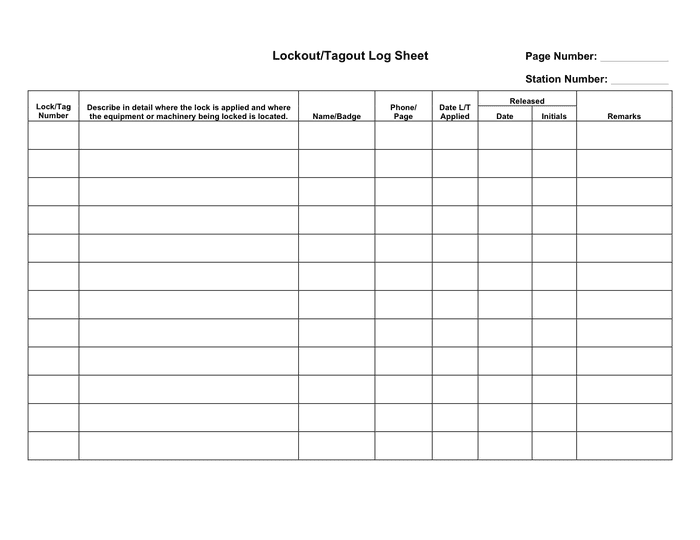
Here’s a ready-to-adapt structure for creating your own lockout tagout log sheet template:
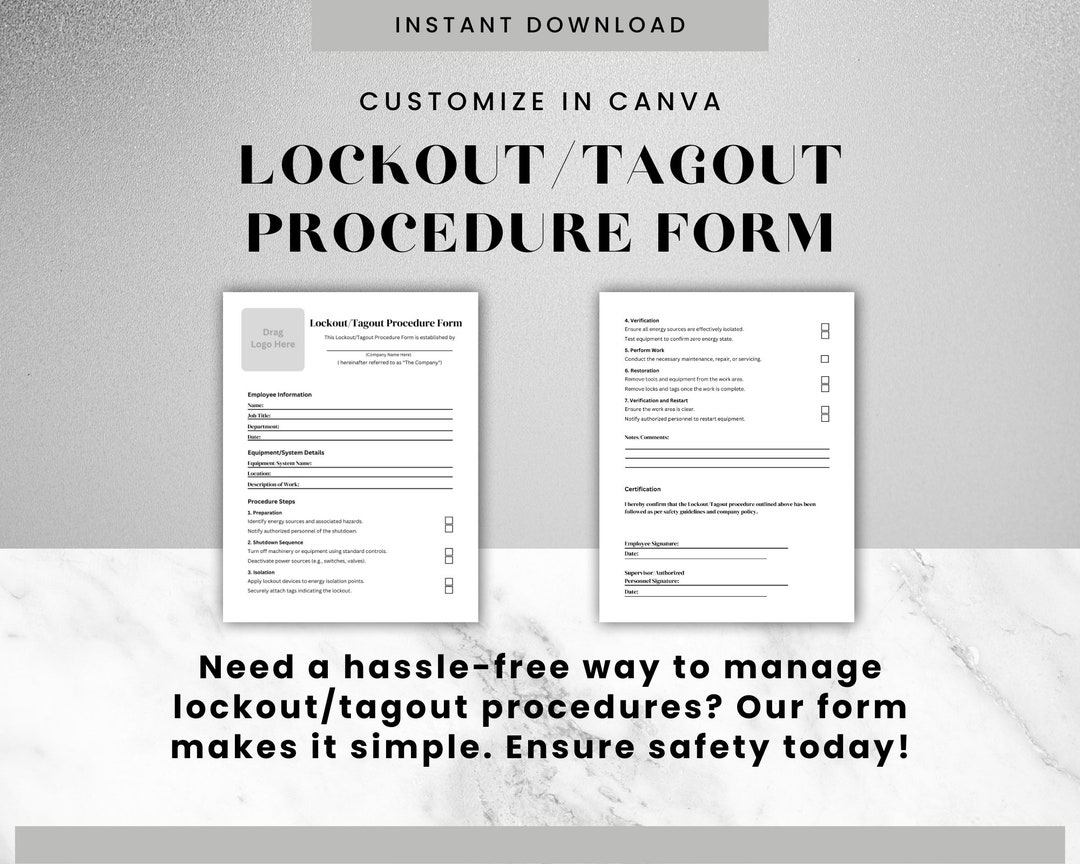
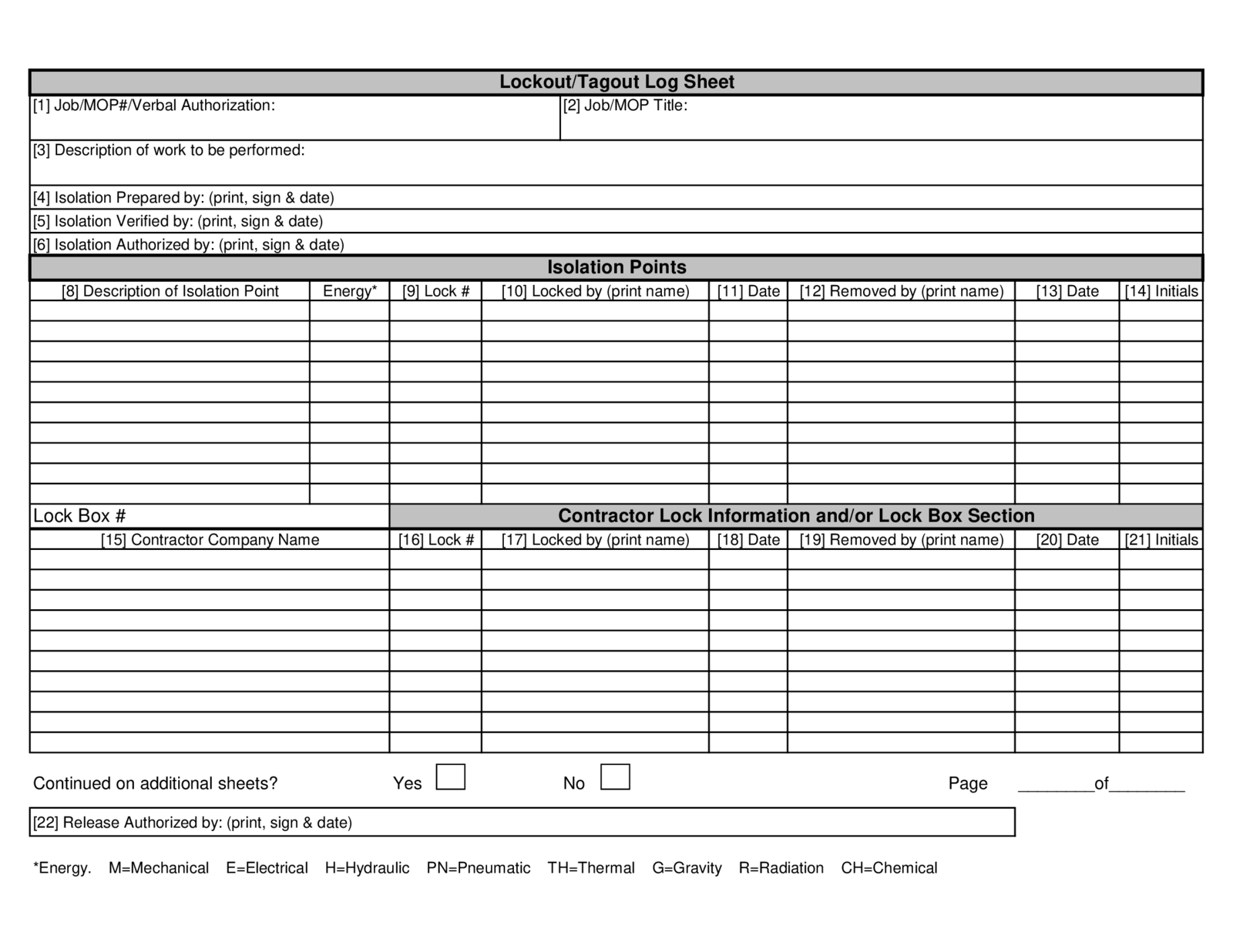
Lockout/Tagout Log Sheet Equipment: _________________________ ID Number: _________________________ Location: ___________________________
| Step | Details | Initials | Time |
|---|---|---|---|
| 1. Lockout Initiated | Date: ________ Start Time: ________ | ||
| 2. Authorized Employee | Name: _______________ ID: _______ | ||
| 3. Energy Sources Isolated | ☐ Electrical ☐ Hydraulic ☐ Pneumatic ☐ Mechanical ☐ Thermal ☐ Other: ________ | ||
| 4. Isolation Points | Circuit Breaker #______, Valve #______, etc. | ||
| 5. Lock/Tag Applied | Lock ID: ______, Tag ID: ______ | ||
| 6. Verification of Zero Energy | Tested with: ______________________ | ✅ | |
| 7. Work Performed | Description: ________________________ | ||
| 8. Lock Removed | By: __________ Time: ________ |
Signature of Authorized Employee: ___________________ Supervisor Review (if required): _________________
Print multiple copies or convert to digital form for daily use.
Final Thoughts: A Template Is Only as Strong as Its Use
A lockout tagout log sheet template isn’t magic. It’s a tool—one that only works when embedded in a culture of safety. The best template in the world fails if employees skip steps, falsify entries, or treat it as bureaucracy.
Implement it right: train thoroughly, audit consistently, and lead by example. Post logs visibly. Review them in safety meetings. Make them part of your operational rhythm.
When used correctly, a LOTO log sheet doesn’t just protect machines—it protects people. And in the end, that’s what compliance was meant to achieve.
Start today. Download or design a template. Test it on one machine. Refine it. Scale it. Because every lock tells a story—make sure the log sheet tells the truth.
FAQ
What should be included in a lockout tagout log sheet? A complete log includes equipment details, employee info, energy sources isolated, lock/tag IDs, verification method, and clearance signature.
Is a LOTO log sheet required by OSHA? While OSHA doesn’t explicitly mandate a “log sheet,” documentation of lockout procedures and employee training is required under 29 CFR 1910.147.
Can multiple employees use the same log sheet during group lockout? Yes, but each employee must apply their own lock, tag, and record their details. The log should list all participants.
How long should LOTO logs be kept? Retain completed logs for at least one year for audit and compliance purposes.
Can I use a digital LOTO log sheet? Yes, digital logs are acceptable and often preferred for their accuracy, accessibility, and integration with other systems.
Who is responsible for filling out the LOTO log? The authorized employee performing the maintenance is responsible for completing the log in real time.
Are pre-filled or auto-dated logs acceptable? No. Logs must be completed at the time of lockout and verification to ensure accuracy and accountability.
FAQ
What should you look for in Lockout Tagout Log Sheet Template for Workplace Safety? Focus on relevance, practical value, and how well the solution matches real user intent.
Is Lockout Tagout Log Sheet Template for Workplace Safety suitable for beginners? That depends on the workflow, but a clear step-by-step approach usually makes it easier to start.
How do you compare options around Lockout Tagout Log Sheet Template for Workplace Safety? Compare features, trust signals, limitations, pricing, and ease of implementation.
What mistakes should you avoid? Avoid generic choices, weak validation, and decisions based only on marketing claims.
What is the next best step? Shortlist the most relevant options, validate them quickly, and refine from real-world results.