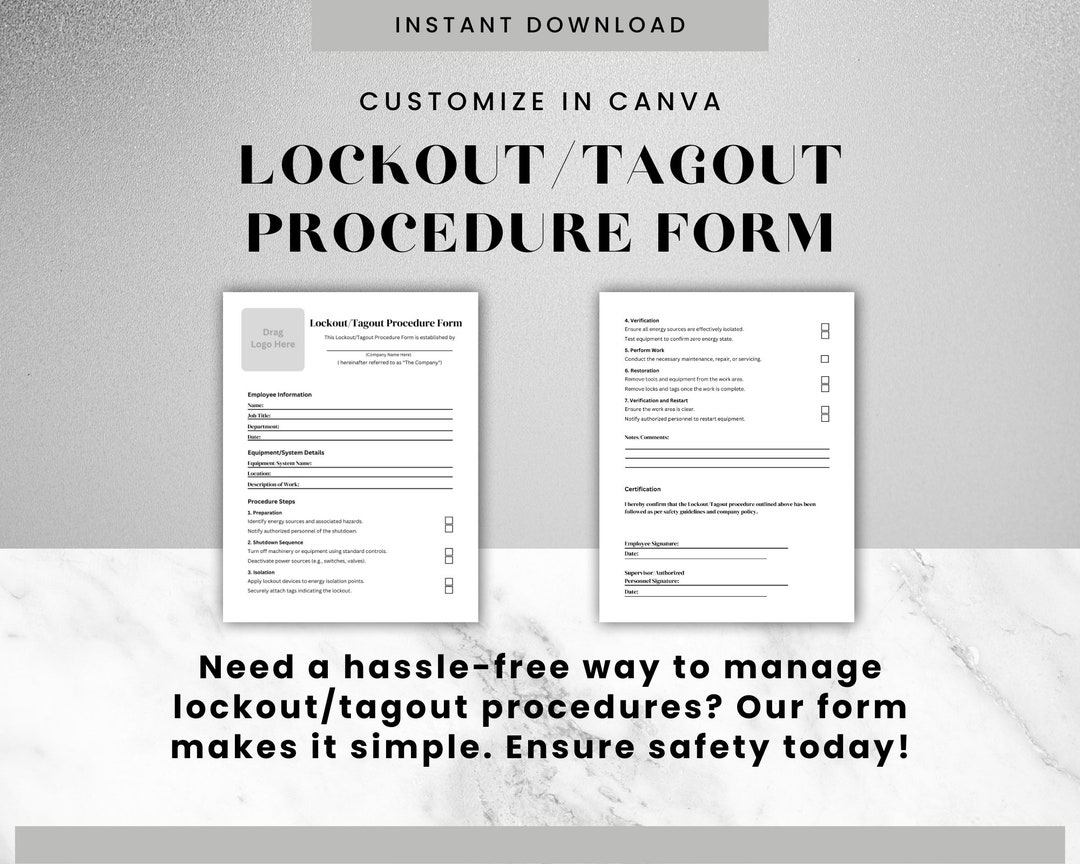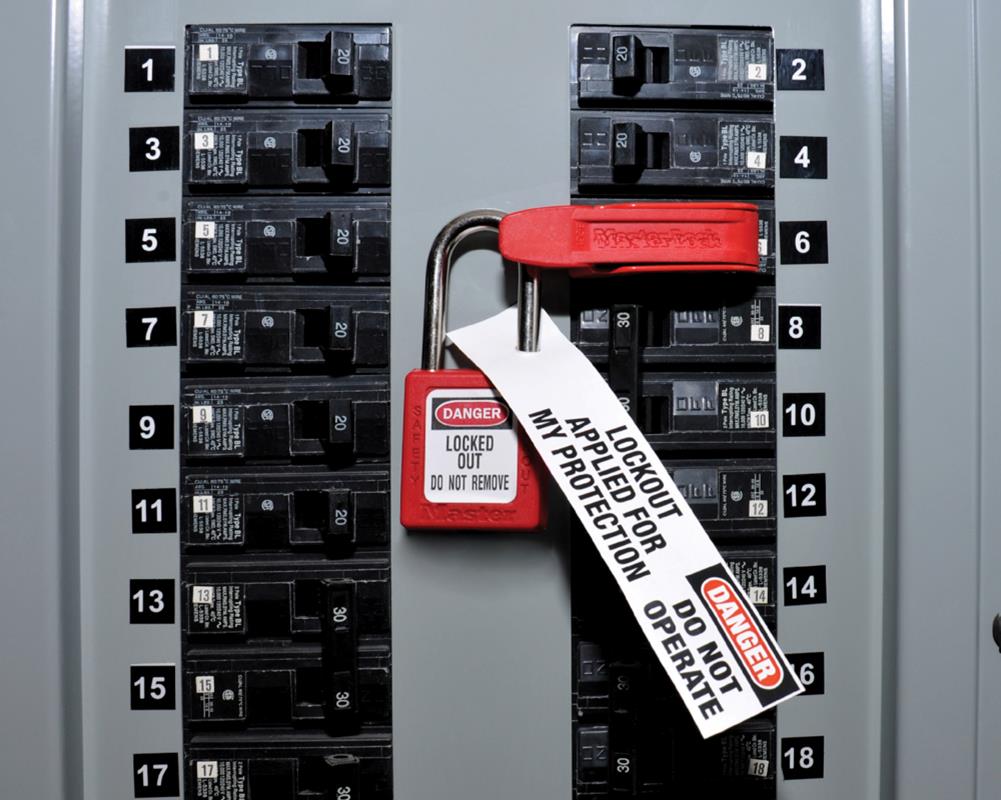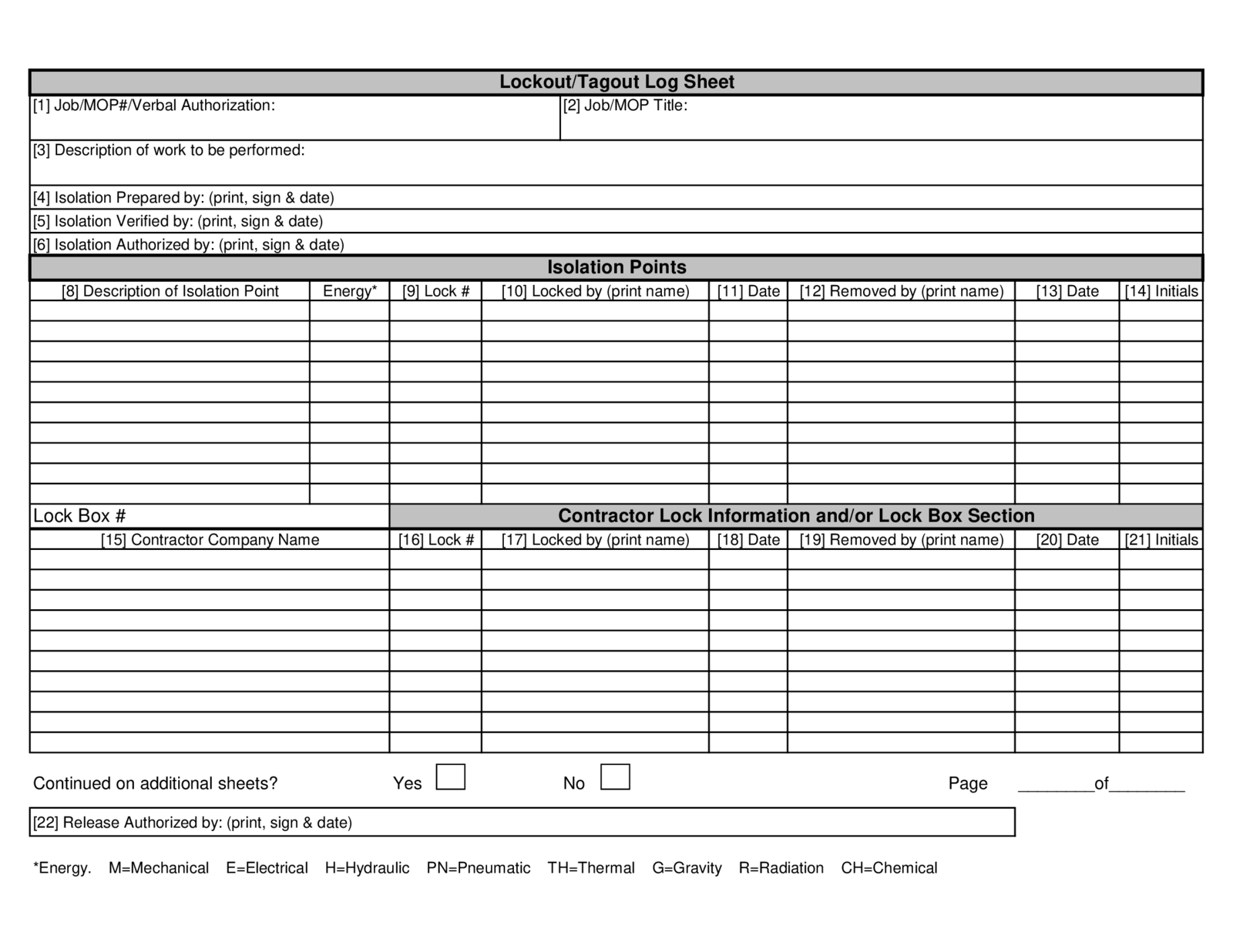
Workers shouldn’t gamble with their lives when servicing machinery. Yet, every year, avoidable injuries and fatalities occur because of uncontrolled hazardous energy. At the heart of preventing these incidents is a well-structured lockout tagout (LOTO) plan. The right lockout tagout plan template doesn’t just check a compliance box—it creates a repeatable, reliable system that protects employees and streamlines maintenance workflows.
While OSHA 1910.147 sets the standard, it doesn’t hand you a ready-to-use plan. That’s where a practical, adaptable lockout tagout plan template becomes essential. This guide walks through exactly what to include, how to customize it, and where most organizations fall short—even when they think they’re compliant.
Why a Generic Template Isn’t Enough (And What to Do Instead)
Many safety managers download a free lockout tagout plan template from a PDF repository, fill in the company name, and call it a day. That’s a compliance illusion.
A boilerplate template might look thorough on paper but fail in real-world application because it doesn’t reflect your equipment, energy sources, or team structure. For example, a template designed for manufacturing may overlook the unique lockout challenges of a commercial kitchen or HVAC maintenance crew.
Common pitfalls with off-the-shelf templates:
- Missing equipment-specific procedures
- Inadequate identification of multiple energy sources (e.g., pneumatic, hydraulic, electrical)
- No clear role assignments during lockout execution
- Overlooking group or shift交接 (shift交接 = shift handover) scenarios
A template should be a starting framework—not the final product. Use it to structure your plan, then customize every section with actual machinery, site conditions, and personnel roles.
Pro Tip: Audit three of your most frequently serviced machines. Map their energy sources, isolation points, and required tools. Plug this data into your template to turn it from generic to operational.
Core Elements of an Effective Lockout Tagout Plan Template
An effective LOTO plan isn’t just about locks and tags—it’s a documented energy control program. Your template should include these seven non-negotiable components:
#### 1. Scope and Purpose Define which equipment and processes the plan covers. Clarify that it applies to servicing, cleaning, repair, and setup operations where unexpected energization could cause harm.
Example: “This plan applies to all fixed machinery in production areas, including conveyor systems, packaging lines, and industrial presses. It does not cover corded hand tools used outside machine guarding zones.”
#### 2. Authorized vs. Affected Employees Clearly distinguish roles:
- Authorized employees perform lockout and control hazardous energy.
- Affected employees operate or use equipment but don’t service it.
Your template should list training requirements and responsibilities for each. Misclassifying workers is a common OSHA violation.
#### 3. Energy Source Inventory Create a master list of equipment and their energy sources (electrical, mechanical, hydraulic, chemical, thermal, etc.). For each machine, identify:
- Primary and secondary energy sources
- Isolation points (disconnects, valves, bleed points)
- Lockout device type (valve lock, circuit breaker lock, hasp)
Use a table in your template for consistency:
| Equipment | Energy Type | Isolation Point | Lockout Device |
|---|---|---|---|
| Hydraulic Press | Hydraulic, Electrical | Main disconnect, fluid release valve | Circuit lock, valve lock |
| Conveyor System | Electrical, Mechanical | Disconnect switch, tension release | Lockout hasp, padlock |
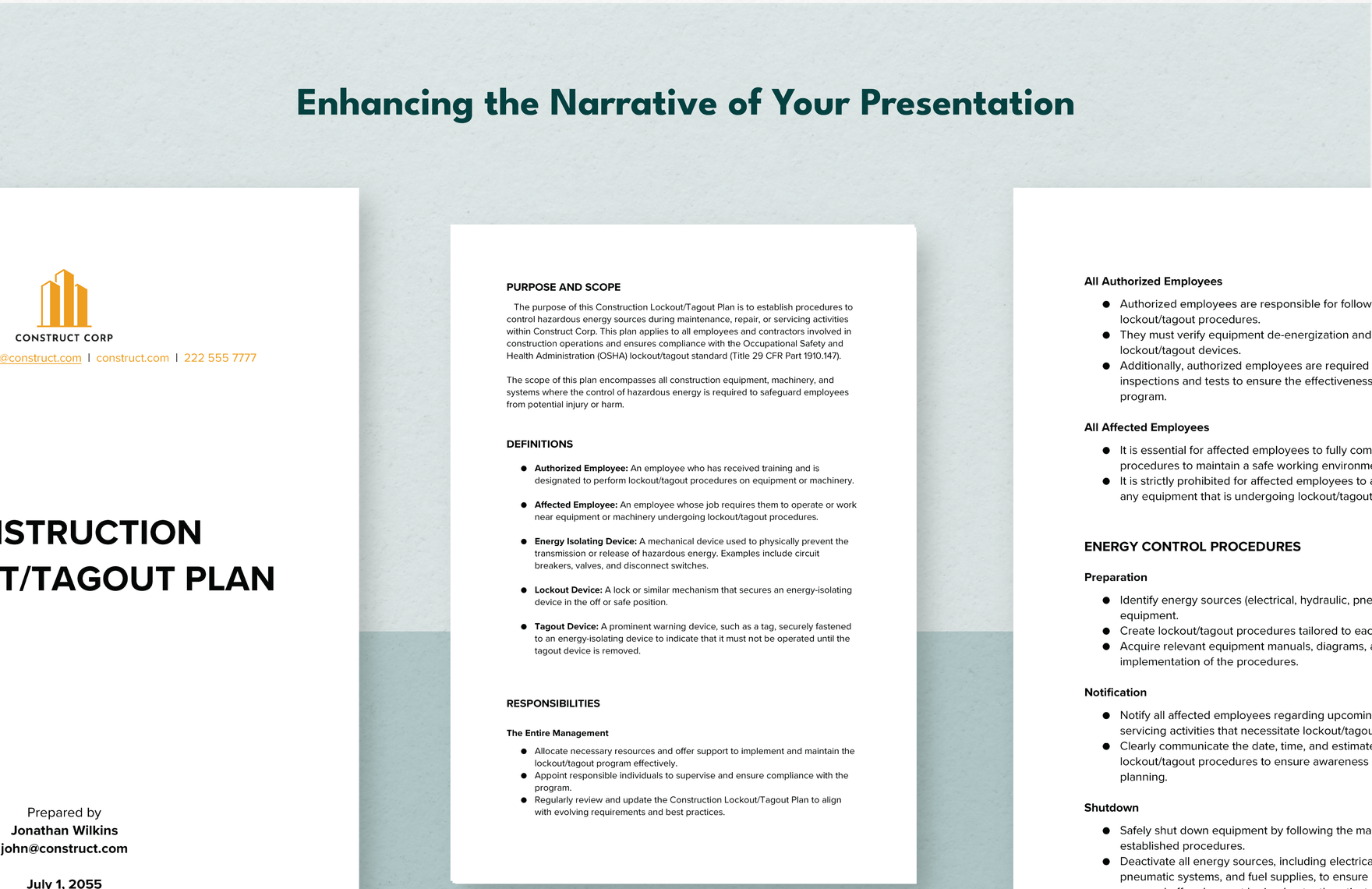
#### 4. Step-by-Step Procedures This is the operational core. Each machine should have a dedicated procedure with numbered steps:
- Notify affected personnel.
- Shut down equipment using normal controls.
- Isolate all energy sources.
- Apply lockout device(s) and personal lock.
- Release stored energy (e.g., bleed lines, block moving parts).
- Verify isolation (attempt to restart—only if safe).
Critical Note: Verification is often skipped. Your template must emphasize this step as mandatory, not optional.
#### 5. Group Lockout Procedures When multiple workers service one machine, the template must outline a group lockout process. This includes:
- Primary authorized employee coordinating the lockout
- Use of a group lockout box
- Each worker applying their personal lock to the box
- Clear communication protocol during re-energization
Without this, tag removal becomes a chain of trust—exactly what LOTO is designed to avoid.
#### 6. Training and Certification Records Include a section to record training dates, content, and employee signatures. OSHA requires retraining every 12 months or after procedural changes.
Your template should have a simple tracker:
| Employee Name | Role | Training Date | Retraining Due | Signature |
|---|---|---|---|---|
| John Doe | Authorized | 2025-01-10 | 2026-01-10 | [ ] |
#### 7. Periodic Inspections The template must schedule annual inspections where an authorized employee audits a random sampling of LOTO procedures. Document findings and corrective actions.
Real-World Use Cases: How Templates Adapt to Different Environments
A good lockout tagout plan template proves its value when applied across industries. Here’s how it evolves:
#### Manufacturing Floor High-energy machines like stamping presses or robotic arms require detailed procedures. The template includes machine-specific diagrams showing lockout points. Training focuses on coordination between maintenance and production teams.
#### Commercial Facilities HVAC technicians servicing rooftop units face electrical and mechanical hazards. The template adds fall protection notes and weather-related verification steps (e.g., “Do not attempt verification during high wind.”).
#### Food Processing Plants Here, cleaning cycles introduce frequent lockout scenarios. The template integrates with sanitation schedules and includes lockout for CIP (Clean-in-Place) systems, often overlooked.
#### Construction Sites Mobile equipment (e.g., compressors, welders) changes location daily. The template emphasizes portable lockout kits and shift交接 logs to ensure continuity.
Common Mistakes That Undermine LOTO Plans
Even with a solid template, execution often fails due to human and systemic gaps.
1. Skipping the Verification Step Workers lock out but don’t verify zero energy. They assume “it’s off.” That assumption kills. Fix: Make verification a signed step in every procedure.
2. Using Tags Without Locks Tagout alone (without physical lockout) is only permitted under strict OSHA exceptions. Yet many sites use tags on valves or breakers with no lock. Fix: Treat tags as warnings, not safeguards. Use them only when locks aren’t feasible—and document why.
3. Incomplete Equipment Coverage Managers focus on big machines, ignoring smaller gear like bench grinders or mixers. Fix: Audit all equipment. If it has hazardous energy, it needs a procedure.
4. Poor Lock Management Lost keys, shared locks, or missing hasps create workarounds. Fix: Issue individual lock kits with employee-specific locks and keys. Use color coding by department.
5. Failing to Update Procedures After retrofitting a machine, the LOTO plan stays unchanged. The template may be current, but the application isn’t. Fix: Tie procedure updates to any equipment modification project.
5 Essential Tools to Support Your Lockout Tagout Plan
No template works without the right tools. Integrate these into your safety ecosystem:
- Lockout Station Kits
- Wall-mounted stations with locks, tags, breakers, and valve devices. Brands like Grace Products and Brady offer customizable setups.
- Energy Isolation Diagrams
- Visual schematics showing lockout points. Include these in your template as appendices.
- Digital LOTO Management Software
- Platforms like CapLinked or SafetyChain let you store procedures, assign training, and track audits digitally.
- Portable Lockout Boxes
- For group lockout. Each technician places their lock on the box, which holds the master key or switch.
- Tagout Printers
- On-demand tag printers (e.g., Brady BMP61) ensure tags are durable, legible, and consistent.
How to Implement Your Lockout Tagout Plan Template in 5 Steps
- Assemble a LOTO Team
- Include maintenance leads, safety officers, and floor supervisors. Their input ensures realism.
- Conduct an Energy Audit
- Walk every area. Identify each piece of equipment and its energy sources. Photograph isolation points.
- Customize the Template
- Populate each section with site-specific data. Turn generic steps into actionable checklists.
- Train and Certify
- Run hands-on sessions. Have employees perform a full lockout using the new procedures.
- Audit and Improve
- Six months after rollout, conduct surprise audits. Revise the template based on gaps found.
Workflow Tip: Integrate LOTO into work order systems. No maintenance ticket should be approved without confirming lockout procedure availability.
Final Thoughts: A Template Is a Foundation, Not a Finish Line
A lockout tagout plan template is only valuable when it’s alive—used daily, reviewed annually, and treated as a critical safety document. Don’t settle for a document that sits in a binder. Build one that mechanics reach for before touching a machine.
Start with a solid template. Customize it ruthlessly. Train relentlessly. Audit honestly. That’s how you turn paperwork into protection.
Now—pull your current plan from the shelf. Does it pass the real-world test? If not, use this guide to rebuild it. One missing lockout step could be the difference between a safe shift and a life-altering incident.
FAQ
What should a lockout tagout plan include? A complete plan includes scope, roles, energy source inventory, step-by-step procedures, group lockout rules, training records, and inspection logs.
Can I use a tag without a lock? Only in limited cases where energy isolation can’t be locked. OSHA requires a full tagout program with additional safety measures if locks aren’t feasible.
How often should LOTO procedures be reviewed? Annually. Each procedure must be inspected at least once per year to ensure compliance and accuracy.
Who is responsible for implementing lockout tagout? Authorized employees perform lockout. Employers are responsible for establishing the program, providing training, and enforcing compliance.
Do all machines need a LOTO procedure? Yes, if they have hazardous energy that could harm workers during servicing or maintenance.
What’s the difference between lockout and tagout? Lockout uses a physical lock to prevent energizing. Tagout uses a warning tag. Lockout is preferred; tagout requires extra safeguards.
Can multiple people use the same lockout point? Yes, using a group lockout hasp or box. Each worker applies their personal lock. Only when all locks are removed can the equipment be re-energized.
FAQ
What should you look for in Lockout Tagout Plan Template: A Practical Guide to Safety Compliance? Focus on relevance, practical value, and how well the solution matches real user intent.
Is Lockout Tagout Plan Template: A Practical Guide to Safety Compliance suitable for beginners? That depends on the workflow, but a clear step-by-step approach usually makes it easier to start.
How do you compare options around Lockout Tagout Plan Template: A Practical Guide to Safety Compliance? Compare features, trust signals, limitations, pricing, and ease of implementation.
What mistakes should you avoid? Avoid generic choices, weak validation, and decisions based only on marketing claims.
What is the next best step? Shortlist the most relevant options, validate them quickly, and refine from real-world results.